
In the past, making a high-quality 3D asset required a combination between technical skills, artistic skill and considerable amounts of time. Designers had to manually sculpt and apply textures, alter lighting and prepare files for various platforms. Artificial intelligence is transforming this process. AI-powered 3D modeling tools let creators to create quickly detailed objects, beginning with just a simple text message or image.
This innovative approach helps make 3D design more accessible for novices and professionals alike, and also allows for quicker production as well as innovative experimentation.
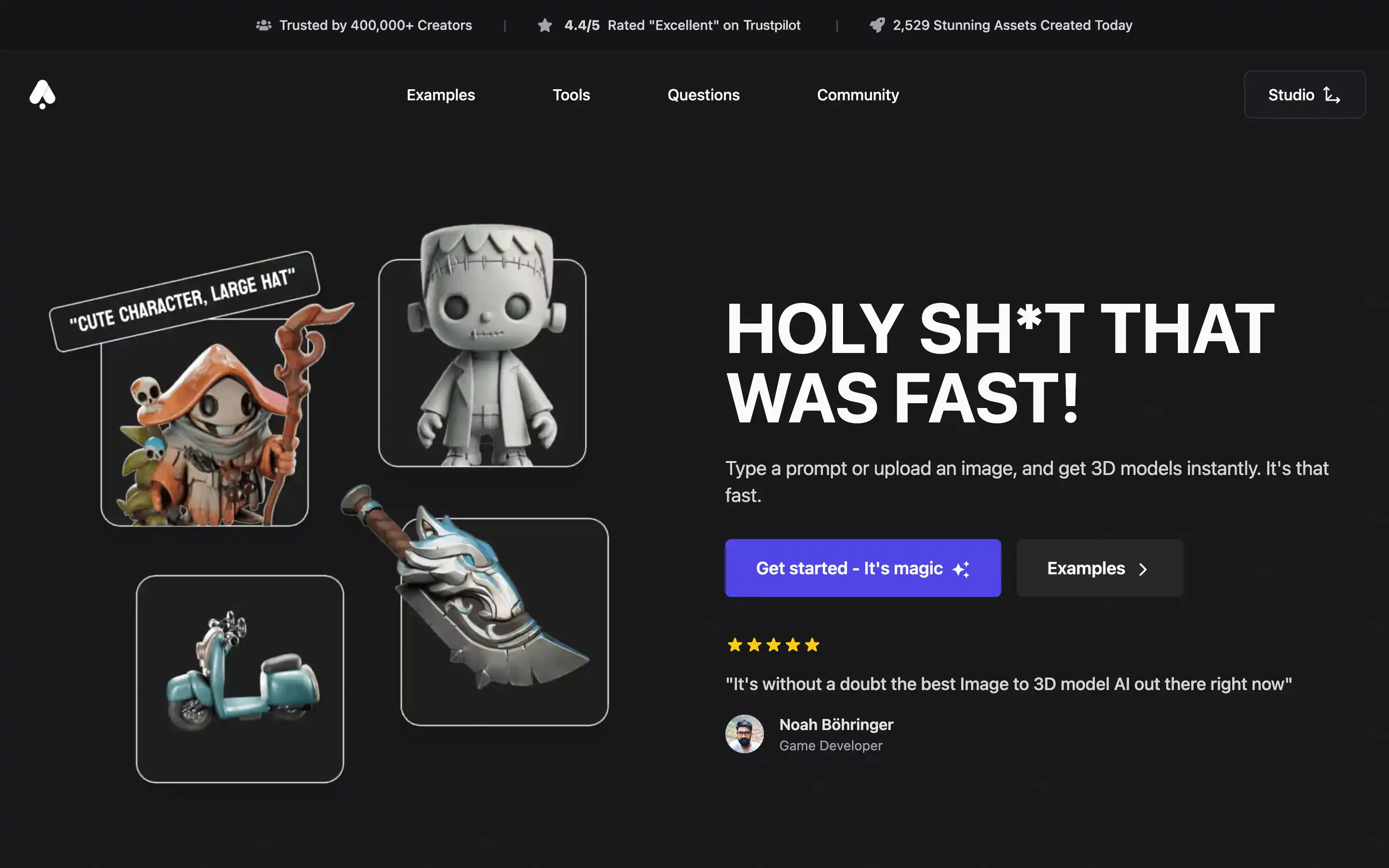
In a matter of minutes, you can go from image to 3D model in just a few minutes.
The image to 3D models technology has made a significant leap in this area. Instead of creating models from scratch intelligence analyzes an image, identifies shapes and depth, and transforms them into an entirely usable 3D asset.
This is especially useful for industries that rely on speed and accuracy in visuals. Game developers can quickly prototype architectural models before they are built as well as product designers are able test ideas without long modeling sessions. It is not just educators and marketers who are benefiting from the ability to transform concepts from visual into 3D interactive content.
The time savings are significant. The savings in time are substantial.
The Reasons AI 3D Model Creation Is gaining popularity
AI 3D models are in great demand due to their ability to simplify complex workflows. Artificial intelligence systems that are trained on large data sets can create realistic materials and shapes that are consistent and accurate.
This increases not only productivity, but also creativity. Designers can try multiple versions of a concept within a short period, compare results, and then choose the best one. The rapid iteration process is now essential to various industries like virtual reality, film production and advertising.
Accessibility is an important benefit. A lot of modern platforms are designed to ensure that those with little or no background in 3D design can still produce high-end assets.
Seamless integration into Professional Workflows
Professionals, the compatibility of their software is just as important as speed. Modern 3D models AI platforms are built to work seamlessly with existing pipelines. Models can be exported in commonly supported formats such as FBX as well as OBJ. They are additionally compatible with rendering software and 3D printing systems.
The organization of asset libraries plays crucial roles in efficient production. Making sure that every model is saved in a searchable library helps teams organize their projects and keep them manageable. Filtering the files with tags and downloading them in bulk and accessing older versions swiftly can save you hours of administrative tasks.
Privacy and security are becoming more widespread and offer creators the freedom to utilize their own assets for commercial and creative projects in a matter of minutes.
Control and precision with AI Tools
There is a misconception that automation removes control, but in reality, modern AI is used in 3D modeling tools often include detailed adjustment features. Users can define precise measurements, identify pivot points, and guarantee proper placement of objects in scenes. These capabilities are essential to simulation, animation, as well as architectural visualization, where precision is crucial.
Artificial intelligence can also be used to create realistic-looking textures. This allows designers to create materials more quickly. It reduces the time required to do manual painting while still maintaining a professional appearance.
Look Ahead at the Future of 3D Model AI
As artificial intelligence continues to evolve, the possibilities for 3D model AI will expand further. Advanced AI systems could be able to build complete environments, optimize assets automatically and adapt models to different platforms with no additional steps.
Platforms built specifically to serve this purpose are demonstrating how powerful the tools they are. 3D AI Studio the ultimate studio for 3D assets reflects the new generation of software that is designed to ease creation, speed up workflows, and assist creators transition from an idea to a finished model with minimal effort.
Conclusion
Digital content production is being transformed due to the ability to swiftly transition from a idea to a finalized product. With the help of image-to-3D model technology and the latest AI 3D model tools, creators no longer have to be hampered by manual workflows that are slow and inefficient.
The technology will continue to advance and play a larger impact in fields such as entertainment, gaming engineering, and education. They will help make high-quality 3D production easier, more efficient and more affordable.