
The initial wave of artificial intelligence showed that software was able to comprehend language, recognize patterns, and assist people with increasingly complex tasks. The majority of these programs depended on sending data to remote servers prior to receiving a response. Cloud computing has assisted AI adoption but it also has brought problems, including latency security, infrastructure cost and the ability to adapt for changes in technology.
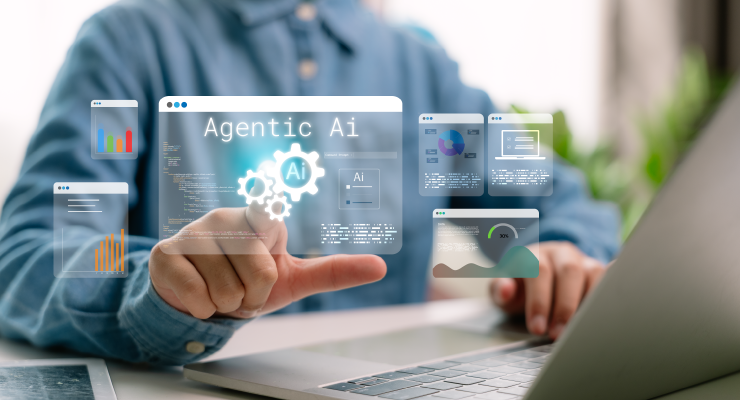
Nowadays, many engineering firms are shifting to a different concept. They no longer view artificial intelligence as an inaccessible service, but instead designing systems that are executed much closer to the point that the decision-making process takes place. This shift is driving on-device AI adoption, which allows applications to react faster and reduce dependence on external infrastructure, while maintaining greater control over the sensitive information.
Modern AI requires infrastructure designed for real-world work
The choice of the language model isn’t enough to produce intelligent software. Performance also depends on the architecture. The performance of an AI application on the production line is influenced by the efficiency of runtime and observability, as well as deployment flexibility.
The increasing complexity of AI agents has resulted in an increased demand for more robust AI agent infrastructure that can support autonomous workflows as well as intelligent decision-making. Instead of relying on generic systems that can be used for any possible scenario Many organizations are now relying on specific infrastructure that is tailored to their particular operational needs.
Thyn was founded on this premise. Thyn does not offer an individual AI application, but rather develops runtime engines that can support various specialized solutions, while allowing them to evolve independently. This design approach allows engineers to focus on solving business challenges instead of rebuilding the main infrastructure.
Better tools help developers build better systems
As AI becomes embedded into software, developers need more than APIs. They require environments that ease deployment monitoring, testing and monitoring and runtime management.
Modern AI developer tools increasingly emphasize transparency and control. Developers must know how their AI systems behave in real-time, and be able accurately gauge latency, and optimize the use of resources, without sacrificing reliability or performance.
Thyn invests heavily in the foundations of engineering, focusing more on measurable system performances rather than claims made by marketing. Runtime research and deployment strategies, as well as evaluation frameworks, user experience and observability are all considered as core engineering disciplines which enhance every product within its ecosystem.
Specialized intelligence is more efficient than platforms that have one size fits all
Not every AI workload is the same. Cryptographic, financial trading, marketing automation, embedded software and autonomous systems have distinct performance requirements, security models, and operational constraints.
Rather than forcing every application to use the same infrastructure, Thyn develops dedicated engines built around specific domains. It allows applications to be created independently yet still benefitting from research and management.
The same principles are beginning to have an impact on AI agents for coding. Instead of serving as general-purpose assistance, modern coders are becoming more focused, helping developers create code, analyze repositories, automate repetitive engineering tasks and accelerate the speed of delivery of software, while staying in the existing development workflows.
Building more intelligence that is closer to where the decisions are made
Artificial intelligence will be more than generating information in the future. The most successful systems are adept at analyzing contexts, take decisions and perform actions in a timely manner.
Local intelligence could provide significant benefits to products that require responsiveness, privacy, and reliability. On-device AI reduces the dependence of networks can reduce latency and permits applications to continue functioning even if connectivity is not optimal. It improves the user experience and gives organizations more control over their data and infrastructure.
The scalable AI agent architecture ensures that intelligent systems are observable and able to be maintained. It also permits them to evolve as requirements shift.
Thyn is a new company which is in this direction by focusing on the structure behind intelligent software, instead of focussing on only applications. Thyn’s runtime architecture that is advanced with a specialized engine, strong AI development tool and advanced AI code agents are assisting in creating an ecosystem where AI is more effective, faster, secure, more reliable and ultimately more efficient for those who develop the next generation of intelligent products.